Most people only know Jaime Escalante from Stand and Deliver. Few know there was a Chinese immigrant teacher who did something just as extraordinary: For 20 years in the Arizona desert, he took the state’s poorest Indigenous, Latino, and Black middle schoolers —many with broken English and shattered foundations —and turned them into statewide champions. His name is Michael Xu. The “Sage from the East.” A man who survived China’s Cultural Revolution, hard labor in the jungle, lifelong dyslexia, and insomnia…. yet became a legendary math teacher. This thread is the first time his full story is being told. And it reveals something much bigger than one teacher’s success.
Abstract: This paper examines the cognitive and curricular problems of Common Core elementary mathematics. Through analysis of Big Ideas Math and related instructional practices, it argues that, visual representations are employed excessively and without sufficient transition to symbolic reasoning and mathematical abstraction. At the same time, standard algorithms and procedural memory are de-emphasized, while multiple strategies are treated as goals in themselves rather than as means to efficient problem solving.
The paper further argues that the opposition between understanding and memorization reflects a serious cognitive misconception. In practice, the proliferation of visual models and solution methods tends to keep instruction at the level of surface features rather than guiding students toward deeper conceptual structure. As a result, the curriculum becomes diffuse and overloaded, increasing students’ burden and extending learning time. Difficulties in fractions among American students reflect these deeper structural and cognitive problems.
The study concludes that elementary mathematics should remain grounded in practicality, clarity, and coherent procedural structure so that most students can achieve solid mastery.
This article was produced for ProPublica’s Local Reporting Network in partnership with KQED. Sign up for Dispatches to get stories like this one as soon as they are published.
This story was originally published by ProPublica.
Reporting Highlights
Massages in Class: A California teacher was deemed “unfit to teach” after students reported him for touching them in ways that made them uncomfortable, including massaging their shoulders.
License to Teach: Jason Agan is one of 67 teachers whose credentials were not revoked by California after their schools determined they had committed sexual harassment or misconduct.
A Red Flag: The only visible sign that a teacher has been disciplined is a red flag icon next to their name on the state website of credentialed educators. It does not specify why.
These highlights were written by the reporters and editors who worked on this story.
Jason Agan was impossible to miss at Angelo Rodriguez High School. The San Francisco Bay Area teacher was loud and gregarious, a fixture on campus since the Fairfield school opened in 2001. He ran the student government and called himself the man behind the curtain, organizing pep rallies and prom. He taught AP calculus, so advanced math students ended up in his classroom, jostling for his approval and letters of recommendation. Some considered him a mentor who inspired a love of math — and even a second father.
But for years students also whispered about Agan’s behavior, according to interviews with 14 Rodriguez High graduates, most of whom he had taught. He touched some of them in public in ways that made them uncomfortable, they said, including hugging students and massaging their shoulders. And he seemed fixated on enforcing the dress code, calling out girls whose shorts were too short.
Nearly two decades into Agan’s tenure, and on the heels of the #MeToo movement, students had enough. At least 11 students and one parent submitted written complaints about his behavior to school administrators in 2018, drawing at least two warnings to stop, a KQED and ProPublica investigation found. By January 2019, the Fairfield-Suisun Unified School District had taken steps to fire him, suspending him without pay.
Agan pushed back, and nearly a year later an independent panel convened by the state to hear his case deemed him “unfit to teach.” The panel’s decision meant that the popular educator was officially out of the job where he had spent his entire teaching career.
But the panel’s review only addressed his employment at this one school district, and its finding was not shared publicly. It would be up to the state’s teacher licensing agency to determine whether additional discipline would be imposed, including whether Agan could keep teaching in California public schools.
Over the next three years, Agan was hired at a second school and then a third. During that period, the state issued a one-week suspension of his teaching license for his behavior at his first school. Then, Agan faced another accusation of unwanted touching — this time, by an eighth grader at his second school, according to school records. The state’s teaching credentialing agency did not inform the other schools or the parents of students in Agan’s classes of the full extent of what went on at Rodriguez High.
Agan, now 47, did not respond to multiple requests for an interview, and someone at his address hung up when a reporter rang his apartment buzzer and identified herself. Nor did he respond to questions sent via email or certified mail to his home about students’ accusations and his job history. He previously denied any sexual motivation in touching students, telling the independent panel that he was simply offering students support and encouragement — not massaging them, according to records obtained by the news outlets.
A broad look at California’s Commission on Teacher Credentialing by KQED and ProPublica shows a pattern of delays and inaction, combined with a lack of transparency, that have allowed educators to continue teaching after school districts reported them to the state for sexual harassment or other misconduct of a sexual nature. Agan’s case is one of at least 67 in which the state has not revoked the professional licenses of educators after school districts determined they had sexually harassed students or committed other types of sexual misconduct, according to a review of available records from 2019 through 2025 obtained by the news outlets. At least 14 of those educators were rehired by other schools, and of those, at least 12, including Agan, still work in education, according to a review of school websites and employment records provided by schools.
Anita Fitzhugh, a spokesperson for the Commission on Teacher Credentialing, said the state automatically revokes teachers’ credentials when they are convicted of sexual criminal offenses, but not necessarily when a district determines they have committed sexual misconduct. She said the state Legislature — not the licensing agency — determines the type of misconduct that results in automatic revocation.
The agency appoints a committee to assess noncriminal cases of misconduct, she said. Agan has not been accused of a crime.
“The Commission’s authority balances protecting students as well as the legal rights of educators who have been accused but not convicted of specific crimes,” Fitzhugh said in a written statement.
“If our job as teachers is to keep children safe, we have to be held accountable for things we do that could harm them.” Alicia DeRollo, former commissioner on California’s teacher licensing agency
The agency’s disciplinary process is unique among licensing bodies in California in how much is kept secret, Fitzhugh said. The fact that a teacher has been disciplined is noted on a state website of credentialed educators, but the database does not explain why.
In contrast, the licensing bodies governing dozens of other professions in California, including doctors, nurses, police officers and lawyers, make the reasons that disciplinary actions were imposed easily accessible on their websites. And at least 12 states, including Oregon, Washington and Florida, do the same for teachers.
“If our job as teachers is to keep children safe, we have to be held accountable for things we do that could harm them,” said Alicia DeRollo, a longtime teacher who served as one of 19 commissioners on California’s teacher licensing agency from 2011 to 2020.
Amid this gap in oversight, Agan found two new jobs and remains in the classroom.
Student Complaints Start Piling Up
For 17 years, Agan taught at Rodriguez High, a sprawling open-air campus nestled alongside rolling hills where cows graze. The school serves the racially diverse commuter town of Fairfield, halfway between San Francisco and Sacramento.
Then in 2018, several sophomores in his accelerated math class reported him to school administrators.
One girl alleged that he took her phone out of her back pocket while she was sitting down taking a test and that he would massage girls’ shoulders in class, according to school records. Assistant principal Gary Hiner cautioned Agan to be careful, sharing that students had told him they were uncomfortable when the teacher walked around class and touched them, according to a summary Hiner wrote about the spoken warning.
In March 2018, a father emailed another administrator after Agan wore a shirt to school that used the Pi symbol to spell out “Pimp.” The father wrote that a teacher should not be wearing a shirt making light of someone who “sexually exploits people for profit.”
This time, assistant principal Allison Klein emailed Agan, reminding him that school was not the place for “physically touching students, inappropriate innuendo, or jokes in poor taste.”
But the next school year, more students complained, records show. In October 2018, a student told her school counselor and then Hiner that Agan had come up behind her and started massaging her neck beneath her long hair. The student said she felt violated and froze, unsure of what to do, records show. She talked to her peers about Agan to see if others had similar experiences, and told Hiner those classmates said he also made inappropriate comments and touched students in his leadership class.
The student was so distraught she asked to transfer out of the math class and had a panic attack two days later in the school psychologist’s office, school records show. Neither Hiner nor Klein agreed to be interviewed.
Within weeks, at least nine more students submitted written complaints, alleging that Agan had massaged their shoulders and singled out female students for what they wore.
“This was a case of someone overstepping boundaries, and we’re not afraid to call this person out,” said Julia Steed, who was a 15-year-oldsophomore when she wrote to school administrators alleging that Agan “had tendencies to touch students,” including palming her head during class. “We were like, ‘Oh no, we’re not dealing with this.’”
Steed, now 23, told KQED and ProPublica that she and her classmates were emboldened by the #MeToo movement to speak out as teenagers across the country were gaining more awareness of boundaries and consent. By the end of 2018, the Fairfield-Suisun school board approved the superintendent’s recommendation to fire Agan.
Agan objected and demanded a hearing, something tenured California public school teachers facing termination are entitled to. His case would be evaluated by an independent panel, which would decide whether to uphold the district’s recommendation.
School districts rarely fire tenured teachers because losing a case is expensive and the teacher can wind up back in the job. Instead, many districts negotiate settlements that allow teachers to resign.
But in Agan’s case, Kris Corey, the Fairfield-Suisun superintendent at the time, said she and the school board believed they had a strong case for termination.
“The board said, ‘We don’t care how much this costs. We are going to a hearing,’” Corey said. “It’s the principle of the matter. This is not OK.”
For eight days in the Fairfield-Suisun district office beginning in July 2019, the three-member panel, including a teacher selected by Agan, heard testimony from students, teachers and administrators.
“This was a case of someone overstepping boundaries, and we’re not afraid to call this person out.” Julia Steed, Rodriguez High graduate
Seven students, three administrators, a former guidance counselor and a parent spoke against Agan. Six of the students told the panel that Agan made them uncomfortable by touching them or commenting on their clothing, including calling one girl “short shorts.” Four of them, including Steed, said they did not feel comfortable going to Agan for extra help with math because they did not want to be alone with him. Several also said they refrained from speaking in class to avoid attracting his attention.
Four former students, three teachers and a staff member spoke on Agan’s behalf. The former students described Agan as a supportive mentor and caring teacher and said they felt at home in his classroom. All four students said he squeezed, rubbed or touched their shoulders, but that his actions did not make them uncomfortable.
One of those students told KQED and ProPublica that her opinion about the teacher’s behavior has changed in recent years. She said she had considered his physical contact normal while in high school. But her perspective shifted as she got older, she said.
“I went to college and talked to people and realized it wasn’t normal,” said the former student, now in her 20s. “Looking back at it, I would have jumped to the other side, to be quite honest.”
During the hearing, Agan testified that he would have stopped touching students’ shoulders if he had been clearly warned, according to a summary included in the panel’s decision. He said he became comfortable with his leadership students, and his actions carried over to math students even though he wasn’t as close with them. He denied massaging students’ shoulders and said students misinterpreted “squeezes or shakes” as massages. He said he did not intend to make students feel uncomfortable and regretted that some students did not feel safe in his class.
One of the administrators, former director of human resources Mike Minahen, told the panel that the details students shared with him during his investigation “weighed heavy” on him. He said it was unusual for high school students to “break the code” and come forward to make a complaint about a teacher, “especially a leadership teacher who has influence over student activities throughout the entire school.” Minahen, who has retired, declined to comment.
In November 2019, the panel unanimously decided Agan should lose his job. Even the teacher chosen by Agan agreed.
“The likelihood of recurrence is high,” the panel wrote in its decision. “Over time he has shown that he cannot or will not exercise good judgment.”
One of the panelists told KQED and ProPublica that she voted to terminate Agan’s employment in part because his alleged behavior continued even after administrators issued warnings.
“His actions were making students, particularly young women, want to not take advanced math classes. They didn’t want to be touched,” said the panelist, who spoke on the condition of anonymity so as not to jeopardize her job in education. “All that directly impacts their access to good colleges because he was a calculus teacher.”
In December 2019, school district officials sent documentation of Agan’s firing, along with details of their investigation, to the Commission on Teacher Credentialing, California’s educator licensing agency, as state law requires for public school teachers who resign or are fired for misconduct. The educator licensing agency would decide whether Agan would be disciplined further, such as receiving a public warning, facing a suspension or losing his license to teach in a California public school.
The disciplinary process typically takes one year, according to the agency.
It would take the state licensing board nearly 500 days to decide what to do in Agan’s case.
How Agan Returned to the Classroom
As the state considered the matter, Agan applied for a job at a Sacramento middle school about an hour away from Rodriguez High in May 2020. It was a time of heightened teacher shortages, especially in subjects like math, during the COVID-19 pandemic.
Agan provided stellar letters of recommendation from former teaching colleagues in his application, which school representatives provided to KQED and ProPublica in response to a public records request.
“Math is a difficult subject for many and my actions were meant as a means of encouragement.” Jason Agan in a job application
Any school searching Agan’s name on California’s credentialing database would have seen a clean record and valid credentials indicating he was legally fit to teach. That’s because while the state licensing agency knew Agan had been fired for what the district described as sexually harassing students, California law prevented the agency from disclosing information about the case. Nowhere in the online public records did it say that Agan remained under investigation by the agency — let alone any details of his employment record.
In his application for the middle school job, Agan acknowledged that he had been fired after being “accused of inappropriately touching students on the shoulders during class.” He wrote that he disagreed with the dismissal and explained that he would often place his hands on students’ shoulders while helping them.
“Math is a difficult subject for many and my actions were meant as a means of encouragement; a way to say, ‘It’s ok that you’re having trouble, keep trying,’” Agan wrote, adding that he recognized his actions “made some students feel uncomfortable.”
Agan started teaching at Ephraim Williams College Prep Middle School that fall. The 175-person school is part of the Fortune network of charter schools. Administrators at Ephraim Williams at the time of Agan’s hiring did not respond to questions about how the school vetted him.
Former Fortune human resources consultant Rick Rubino, who helped the middle school recruit, interview and hire candidates at the time Agan was applying, said the school was not aware that Agan’s former employer concluded that he had sexually harassed multiple students. “Do you think any reasonable school district or principal would hire that person?” Rubino said. “No. So clearly, Fortune School did not get that information.”
Rubino said he “would guarantee that somebody at Fortune called the principal at the school where Jason Agan was teaching in Fairfield and got a good report.” He said he does not remember making that call himself.
The former principal at Rodriguez High did not respond to questions about a reference check. But a Fortune School spokesperson, Tiffany Moffatt, said school officials follow “all state guidelines and regulations and conduct thorough vetting, making decisions based on the information available to us.”
It wasn’t until near the end of Agan’s first school year at Ephraim Williams that the state licensing agency issued its decision regarding his actions at his first school. In May 2021, the state suspended Agan’s license for seven days; two of those days fell on a weekend. The sanction — along with a red flag icon — appeared in the state’s public database of credentialed educators. This would be the only visible clue schools would have of anything amiss in Agan’s work history.
Corey, the former superintendent of Fairfield-Suisun Unified, told KQED and ProPublica that she was “flabbergasted” that he had only been suspended for seven days.
“It was a real mismatch of what happened,” Corey said. “What a disservice it was to those girls.”
Steed, one of Agan’s accusers, said students had done the right thing and shared their concerns about Agan with their school, only for adults at the state level to give him the opportunity to teach elsewhere.
“What’s even the point of going through this whole process?” she said.
A Middle School Student Details Unwanted Touching
In September 2021, a month after Fortune students returned to in-person learning, an eighth grader at Agan’s second school complained about his conduct.
The student told her doctor during a routine physical that Agan had touched her lower back, according to a summary of the complaint.
The girl’s mother told KQED and ProPublica that she reported the incident to the principal, who connected mother and daughter with Rubino, Fortune’s human resources consultant. The mother told Rubino that Agan was giving her daughter a disproportionate amount of attention.
The girl, who is now 17, spoke to KQED and ProPublica on the condition that only her middle name, Sherelle, be used because she is a minor. Leslie, the student’s mother, is also being identified by her middle name to protect her daughter’s identity.
In that same meeting, Sherelle told Rubino that Agan removed his hand from her lower back after she asked him to stop, and he returned to the front of the classroom. But he came back moments later and placed his hand on her shoulder, according to a letter of warning Rubino wrote to Agan after interviewing the girl.
“I felt disrespected. I felt uncomfortable. I felt mad,” Sherelle told the news outlets about the incident. “I felt like even speaking up didn’t matter.”
In his letter, Rubino directed Agan to stop touching students and “dial back” his praise for the girl. Rubino also cautioned that failure to comply could result in further disciplinary action, up to suspension or termination.
Agan denied the allegations in a written response to Rubino obtained by KQED and ProPublica. “I would like to be on record that I dispute it being listed as a ‘fact’ that I touched [the student] on the lower back,” Agan wrote. “I have been extremely diligent in avoiding personal contact with scholars due to my previous experience.”
Leslie had texted Rubino expressing concern about how Agan was vetted for the jobafter she said she saw online posts by students at his former school alleging that he had touched them inappropriately.
“Actually, I was the one who investigated the matter in the Fairfield Suisun School District when Mr. Agan was a candidate,” Rubino texted back that same day in messages reviewed by KQED and ProPublica. “I also checked social media and Google to see if I could find any information about the incident in Fairfield, but I did not find anything.”
Rubino did not answer subsequent questions about the details of his investigation or how much he knew about Agan’s conduct at the teacher’s previous school.
After the state licensing agency recommends educators be disciplined, California law allows it to release its findings, which include a summary of the case, to current supervisors and prospective employers who request it within five years. Fortune appears never to have asked for such findings, according to the logs of these requests between 2020 and 2024 provided by the agency to KQED and ProPublica. A Fortune spokesperson did not say why the charter school did not ask for the information.
“The whole education system would rather protect him.” Leslie, the mother of a student who complained about Agan’s conduct
Leslie said her daughter’s experience at Ephraim Williams only worsened after she reported Agan. Math has always been Sherelle’s favorite subject. But as the school year went on, her grades in Agan’s class plummeted. She needed help but said Agan ignored her.
With just weeks left in the school year, Leslie pulled her daughter out of Ephraim Williams to finish eighth grade at another school.
She only learned about Agan’s disciplinary history when KQED and ProPublica contacted her in January. “The whole education system would rather protect him,” Leslie said. “You let him loose on all these kids.”
Fitzhugh, spokesperson for the teacher licensing agency, said the commission is “committed to keeping all students and schools safe” but is bound by the law in how it disciplines teachers. “The Commission stands ready to implement any additional public protections that the Legislature authorizes,” she said.
Starting the following year, in 2022, records show that Fortune offered Agan a role supporting new teachers rather than assigning him his own classroom. Fortune administrators did not respond to questions about why he was offered the position, which he declined because he had received another job offer in the Bay Area.
“Thank you for the last two years,” Agan wrote, resigning from the school. “It has meant more to me than you could ever know.”
By August 2022, Agan would begin teaching at Clifford School, which serves students in pre-K through eighth grade in Redwood City. He received tenure in 2024.
Wendy Kelly, deputy superintendent at the Redwood City School District, declined to answer questions about Agan’s hiring or say whether the school district was aware he had been accused of misconduct at two previous schools. She told KQED and ProPublica that the district, when hiring, typically calls candidates’ immediate supervisors and checks the database of licensed educators.
She said school districts rely on decisions by the Commission on Teacher Credentialing to “put the best people in the classroom.”
“I was pleased to see that the suspension was only seven days,” Kelly said of Agan’s discipline. “I have to trust that when the CTC reinstates the teacher that the issue has been either resolved, learned from, there’s been consequences in place, which is why they’re employable to the next organization.”
How We Reported This Story
KQED and ProPublica obtained detailed teacher disciplinary records from school districts after filing public records requests with the 300 largest districts in California. We asked for records of sexual misconduct complaints from 2019 through 2025, including any reports to the Commission on Teacher Credentialing. More than 150 districts provided records. If the district determined that an educator had committed misconduct that it characterized as sexual, including sexual harassment by unwanted touching, sending sexual electronic messages and making sexual remarks, we checked the state licensing database to see whether the state had revoked the teacher’s license or imposed other discipline.
I read a document by Hung-Hsi Wu entitled “What is school mathematics?” I recall reading about some of Wu’s ideas back in the 1990s when I worked for the Department of Mathematics at The University of Iowa. Since that time, I did spend 23 years teaching high school mathematics, 22 of which were teaching honors precalculus to Iowa City’s (Big 10 University town and home of a teaching medical school) best and brightest. A few topics caught my eye enough to want to comment.
Regarding fractions, I became aware after teaching high school and before that, working in the Mathematics Tutorial Laboratory at U of Iowa for 7 years, that students really didn’t understand what fractions were. Clearly, it also shows up if one works, for example, in industry, (I turned cast iron and steel parts on automatic lathes in a machine shop off and on) only to find that new workers struggle with measurement — in particular, how to read a tape measure. I once taught a group of 6th graders at the Belin-Blank Center for gifted education (U of Iowa) and we talked about the meanings of “numerator” and “denominator.” In my mind, the numerator is the counter — it says how many. The denominator indicates what is being counted. For example, 3/4 means three quantities of 1/4. In other words, it means 1/4+1/4+1/4, or 3(1/4). On a tape measure, if the distance, say, between 1 and 2 inches is divided into 16 intervals (count those little lines between the 1 and 2 on a ruler), that means that each little space between consecutive little lines represents 1/16 of an inch. If the distance being measured shows 5 of those little lines after the 1 inch mark on the tape measure, then it measures 1 5/16 of an inch. We didn’t use pizzas or areas to do this. We actually used linear measure, much like a number line.
Confusion happens when we confuse fractions as linear measure or distances on a number line, and something like parts of a whole, such as 1/2 of a pizza. In other words, a fraction OF something is different from a fraction that is simply a number or a linear distance on a number line. Wu mentions this idea.
Something else I noticed from the time I was a child was that fractions appeared in music. If you look at the time signature of Paul Desmond’s “Take Five” or Jethro Tull’s “Living in the Past,” you will find 5/4. Again, the numerator 5 tells you how many beats per measure, because the purpose of the 5 is for counting. The denominator 4 tells you what kind of note gets 1 count, in this case, a quarter note (or a 1/4-note). I think it would be tough to explain to a student who is just learning about fractions what is meant by 5/4 of a pizza.
Not only is measurement on a ruler or a time signature in music easy enough to interpret, it can show you equivalent fractions. For example, on that ruler that has 16ths, one can notice that every 4th little line is a little longer than the others, and every 8th little line is longer still. If you focus on every 4th little line, you see that the inch is divided into 4 intervals, or 1/4 of an inch. That shows that 4 of those 1/16ths is equivalent to 1/4 and that 8 of those 1/16ths is equivalent to 1/2. In music, a song can be played in 3/4 time or 6/8 time and the melody is preserved. To me, this is absolutely fascinating, because 3/4 and 6/8 are equivalent fractions! I was captivated by this at a very early age, but I probably wasn’t the only one who noticed, though it was never brought up other than at piano lessons.
I was the district K-12 math coordinator in Iowa City for about 7 years, and when I was looking at K-6 textbooks, I was horrified to see “mixed numbers” expressed as numbers like 1 3/2. Mixed numbers actually are sums of whole numbers and proper fractions (numerator less than denominator) and expressions like 1 3/2 did not look right at all. The thing about mixed numbers is that, while we intend them to mean sums, we don’t write the “+” sign. I recall students who took, for example, -1 2/3, and tried to place it on a number line where -1/3 is, because they added a positive 2/3 to a negative 1. Because our mathematical language is, at times, ambiguous-looking, we have to be very clear what we mean by the symbols we use.
On a different topic, I was tutoring for an algebra 2 honors student a few days ago, and she was working on finding arc lengths on circles. Her central angle (intercepting the arc) was something like 2pi/3 and the radius was 5 inches. She said, “Oh, you just multiply 2pi/3 by 5 and get 10pi/3 inches for the arc length.” I asked her how she knew to do that and she said, “Well, it’s a formula our teacher gave us and it’s in the book.” I asked her if she could do that if the central angle was 120 degrees, so that 120 times 5 is 600. But a 120-degree angle has the same measure as an angle of 2pi/3 (just different units), and with the same radius, shouldn’t the arc length be the same? I then launched into what constitutes an arc – it’s merely some fraction of a circumference. If one uses the central angle divided by the measure of a full rotation, that should mark off an arc intercepted by the central angle. If we divide 2pi/3 by 2pi and multiply that by the circumference – 2pi times 5, we get 10pi/3, which is the same as 2pi/3 times 5 (the formula from the book). With degrees, it’s 120/360 times 2pi times 5, and again we get 10pi/3. Now I ask you – in ten years, will she remember S=theta times r for the length of an arc, or will she remember that an arc is a fraction of a circumference and then have the tools to figure it out?
I once had a student come back from college to tell me that he had to factor x^3-8 and forgot the factoring formula (on a test). However, he recalled my saying that you don’t need to memorize that factoring pattern. If you identify a zero (x=2), then x minus that zero (x-2) is a factor of x^3-8. Polynomial division of x^3-8 by x-2 will yield the other factor as the quotient. This is why I do not believe in memorizing everything in a shaded box in a textbook. As teachers, we need to teach the tools to derive or figure out what we need without the cognitive overload that comes from trying to memorize things like all points on the unit circle with special angle reference angles.
Sorry this is too long, but I have thought a great deal about the things Wu mentioned. As a teacher, I seldom used explanations given in the textbook because often, they were not clear, at least not without a lot of prior development or derivation.
One more thing — current teaching materials are often purchased online, with worksheets and note sheets. Often they are of poor quality. One I saw had a calculus problem that asked for an approximation of the area between the graph of a cubic polynomial and the x-axis between x=0 and x=8 using NINE subintervals (rectangles) and the midpoint rule. Seriously??? EIGHT rectangles, yes, but NINE?? This was for AP calculus AB. I was horrified about that as well. Teachers just assume that those worksheets are nicely stated, and they use answer keys that come with them. To me, this is a HUGE problem with today’s teaching and textbook or other published materials — teachers simply MUST work the problems before they are assigned, but many don’t want to take the time.
Common Core has contributed greatly to decline in academic achievement. K-6 teachers use it as a guide, and feel that it is more of a ceiling to reach rather than a basement to stay above. I found that as I continued teaching high school math, I had to gradually make my tests a bit shorter as students seemed not to be able to finish as easily as they did when I first started teaching. I also noticed that students were coming to high school unprepared to do basic arithmetic, relying heavily on calculators. Number sense just wasn’t as strong as it needed to be — e.g. multiples of 12 or 15 were not readily recognized. Junior high math teachers — often K-8 generalists — would argue that students don’t need to simplify radicals — just give ’em a calculator and round to the nearest hundredth (eyeroll…). For example, something like the square root of 12 over 4 simplifies to the square root of 3 over 2, a frequently used trigonometric ratio. If you haven’t taught trigonometry, you probably won’t recognize how important that kind of number could be.
It always felt like the teachers at the K-8 level felt that they should be the teachers who determined what needed to be learned in math and to what level of expertise. I once gave a presentation to a group of K-8 teachers and gave an example of the basic fact 9 x 7 = 63 and how it was used in all high school math classes through AP calculus. I’m sure that many didn’t understand the examples I gave, and it not, I rest my case.
Standardized testing, at least in Iowa, changed a few times during my tenure as a high school teacher. We had ITED (Iowa Tests of Educational Development) for the first several years, followed by Iowa Assessments, supposedly to align better with Common Core, other state assessments, and the Smarter Balanced Assessment exam. Iowa then came up with using ISASP (Iowa State Assessment of Student Progress) over Iowa Assessments, to be more consistent with The ESSA (Every Student Succeeds Act), thus eliminating time constraints. When I was district math coordinator, we used the item analysis of ITED and then Iowa Assessments, to determine areas where we needed to improve instruction. With ISASP, there is no item analysis for teachers to use in future instructional planning, and scale scores are given, rather than percentile rankings, making it tough for parents to gauge where their students perform on the achievement continuum.
This kind of apples and oranges testing makes it difficult to track how Iowa’s students are doing over a span of a few decades.
Grade inflation is a huge problem, and it is rampant in our public schools. I recall being asked, in my last year of teaching, to “modify my curriculum” so that a student who was failing with 10 days left in the trimester, could pass. She had done nothing all trimester, other than one quiz and maybe three homework assignments, no tests, and was absent at least 50% of the time. When I confronted her about her potential failure, her response was, “I didn’t do anything first trimester (she took the class online) and I passed so I figured I’ll pass this time, too.” Well, she didn’t pass my class. Not sure if anyone overwrote my grade, but I wouldn’t put my name on such a poor performance supporting a passing grade. Administrators love to make these kinds of requests of teachers, and then pat themselves on the back for what a great graduation rate they have and isn’t it so nice that we are lessening the achievement gap?
I think most of these policies are not good for math students.
I am OK with test retakes (one per test) if a student scored below 75% on a test, and the maximum possible retake score is 75%. It encourages students to do their best the first time rather than try to play the system (which is what they do), and it allows for some recovery for the good student who bombs one test.
I am very OK with zeros, particularly on homework that is not attempted. In my experience, completing homework is a very valuable part of learning math. Each day, I cruised the room and looked at everyone’s homework. Sometimes I was spot checking but mostly, I was looking for problems that students had with it. In precalculus honors, for example, there were usually three or four problems that gave many students problems, and I always addressed all questions. Occasionally, I assigned a problem that only a handful of students would/could do, and that was OK. It challenged the top students and I always made it clear that such problems wouldn’t be on any test.
I am also OK with zeros for tests or quizzes that were never taken.
One policy I didn’t see listed was the one about deadlines. The last year that I taught, we couldn’t impose deadlines on anything, so that, for example, a student could turn in a large stack of homework on the last day of the trimester and we were expected to accept it without penalty. I am very opposed to this because the idea of homework is that it facilitated learning as we moved toward a test. It was counted as zero points once we took the test over that chapter.
Math is different from other content areas. You can fail chemistry one year and get an A in physics the next, because one doesn’t lead to the next. In math, it is just different. It is ludicrous to think that a student who can’t pass algebra 1 will be successful in algebra 2. Math learning is sequential, as is learning a world language, and it’s pretty difficult to fill in gaping holes when a student is trying to take a class for which prerequisite learning was incomplete/missing.
One of the more notable problems with much that is written about the National Assessment of Educational Progress (NAEP) regarding relative state performances is that far too often, only overall average scores are compared. Whether we are talking college professors, state education agencies, local educators, members of the press, and more, far too often some important parts of the real story are ignored because only overall average scores are compared.
This isn’t a new problem. The National Center for Education Statistics (NCES) has cautioned about overly simplistic analysis that only looks at overall average scores for many years. NCES even included special comments on the topic in the 2009 NAEP Science Report Card (http://nces.ed.gov/nationsreportcard/pdf/main2009/2011451.pdf).
Below is a partial extract from Page 32 in that report card that highlights some examples of how the picture can be VERY different once more thorough analysis of NAEP is conducted.
The first example used by NCES is Kentucky’s performance in the 2009 Grade 8 NAEP Science Assessment. When you only look at overall average scores, Kentucky scores statistically significantly higher than the national public school average. However, when you only consider scores for White students in each state, Kentucky’s score statistically significantly lower than the national average. Once you learn that in this assessment Kentucky’s NAEP student sample was 85% White, the importance of this additional information becomes far more apparent.
As you can see in the next example from the Page 32 extract, things can work the opposite way, as well. When you only consider overall average scores, Florida’s 8th Graders scored statistically significantly below the national public school average in the 2009 NAEP Science Assessment. But Florida’s Hispanic 8th Graders scored statistically significantly higher than the national public school average for all Hispanics.
In both cases, the picture presented only by the overall average scores is incomplete and might be rather misleading. Very simply, good analysis with NAEP requires more. Those who fail to provide it are not presenting strong arguments for whatever case they are trying to make.
Another example, Mississippi’s Grade 8 Reading improvement
The first comment in this thread deals with general examples from NCES about how comparing state NAEP results by only looking at overall average student scores can provide a very incomplete picture of the true relative performances of those states. In this section, I provide data from the 2013 and 2024 NAEP Grade 8 Reading Assessment to show that comments still being made by educators that Mississippi has not made any headway in moving its notable 4thgrade performance up to the 8th grade are no longer accurate.
It is true, as some engaged in these discussions have written, that when you look at only overall average NAEP Grade 8 Reading scores, Mississippi still ranks towards the bottom of the stack. But what such pundits aren’t telling us is that once you break the data out by race, the improvement in Mississippi’s Grade 8 NAEP Reading performance compared to other states is hard to miss.
The tables below show separate breakouts of scores for White students in the top half and Black students in the bottom half. Some states did not get score reports for Black students as the samples were inadequate in some way, most likely due to low enrollment numbers of Black students in those states. The states are ranked by their reported NAEP Scale Score for Grade 8 Reading in the two listed years.
As you can see below, back in 2013, the year Mississippi started enacting some key education reform legislation, both its White and Black students performed very poorly compared to other states. However, as shown in the right side of the graphic, both the state’s White and Black students’ rankings have moved up since 2013 and in the latest NAEP Grade 8 Reading Assessment are notably higher. But that isn’t the complete story.
One issue with NAEP rankings by scores is that this assessment only tests a sample of students in each state, so all the scores have statistical sampling errors. Due to the presence of sampling errors, it is possible that the true relative performance of two states fairly close in the table might actually be reversed if NAEP had tested all the students in those two states. The presence of this statistical sampling issue is why the tables below, which come from the NAEP Data Explorer web tool (https://nationsreportcard.gov/ndecore/landing), also show information about the statistical significance in the scores. One column of particular interest shows how many states scored statistically “significantly higher” than the state listed in each row. Let’s see how this statistical analysis works out for Mississippi.
For White students, back in 2013 a total of 43 states outscored Mississippi’s by a statistically significant amount in NAEP Grade 8 Reading. By 2024 that number had been cut remarkably as just 7 states outscored Mississippi by a statistically significant amount. Can any reasonable person think that isn’t notable progress?
For Black students, back in 2013, those in 27 other states statistically significantly outscored Mississippi’s. Flash forward to 2024 and now only 2 states can make that claim – just 2.
The message about Mississippi in the tables below also reiterates that you simply cannot get an accurate picture about what is happening in education by only looking at overall NAEP scores. As NCES points out in its 2009 NAEP Science Report Card and as pointed out in the examples using Mississippi, you have to look deeper. Those who don’t do more than look at overall scores are not doing adequate research and may just be cherry picking information to try and support an incorrect case. Don’t fall for that.
There is a lot of discussion of late about Lucy Caulkins’ Teachers College Reading and Writing Project (TCRWP)to teach reading. It got me thinking.
Back in 2003, then New York City schools chancellor Joel Klein really pushed TCRWP as THE program to be used to teach reading in the Big Apple.
Rather conveniently, the National Assessment of Educational Progress (NAEP) started doing what is called its Trial Urban District Assessments (TUDA) around the same time. Basically, the same NAEP used to create state reporting would also be used in some of the nation’s largest school districts. New York City has been in the TUDA for several decades.
TCRWP is on the way out in New York City, but a Chalkbeat study indicated about 48% (maybe more) of the city’s schools were still using TCRWP as of 2019 (https://tinyurl.com/3tesmv48).
With the above information in hand, I decided to look at how the city did on NAEP between 2003 and 2019. The table below has the results (note: years are listed in reverse order with 2019 at the top).
If you look at the percentages of each race testing “below Basic” over time, there doesn’t seem to be much change in the entire time period covered. The same unremarkable lack of change is apparent when you look at the percentages testing “at or above Proficient.”
Equally concerning are some of the reported percentages. Roughly half of the Black and Hispanic students in the city consistently scored in the “below Basic” achievement level. NAEP documentation indicates that means these students didn’t even have a partial mastery of reading.
Except for 2011, fewer than half of the White students scored “at or above Proficient” throughout the time period, as well.
NAEP certainly doesn’t provide very comforting information about reading in New York City during the TCRWP era. Apparently, New Yorkers, the current school chancellor included, have figured this out, too.
Whether we use NAEP or state assessments, reading performance in the US is a serious problem, and trying to excuse this away just doesn’t work.
There’s been a lot of discussion from some teachers and Ed school professors about how the National Assessment for Educational Progress (NAEP) standard for reading proficiency is simply set too high. Some of that discussion centers on a NAEP process that develops equivalent NAEP scores for each state assessment’s proficiency standard (accessible here: https://tinyurl.com/4hspr6y5).
The results of that study for 2022 Grade 4 NAEP Reading are found in the graphic below. You can see that state standards very widely. Virginia, for example, set a proficiency standard below even the threshold score required to be rated a NAEP “Basic” performance. Massachusetts, at the other end of the scale, actually set a standard slightly above the threshold NAEP uses to declare a student proficient in reading.
About 1/3 of the way up the standards graphic from the least demanding state you will see Kentucky, highlighted with a blue arrow, set a proficiency standard about in the middle of the scoring range NAEP only considers to be only Basic level reading.
Given its easy standards, those who want us to believe there is no crisis in reading would surely want to be able to say that Kentucky is reporting far better results than what the NAEP reported.
However, as you can see in the insert below, Kentucky’s own state assessment didn’t return much rosier statistics for Grade 4 Reading in 2022 (Kentucky School Report Card Available here: https://reportcard.kyschools.us. NAEP Data Explorer online here: https://tinyurl.com/2hdcmrnr).
On Kentucky’s assessment, despite the state’s notably lower proficiency standard than NAEP, fewer than half, just 46%, of all the state’s public school fourth graders scored Proficient or better. That doesn’t seem all that much different from NAEP’s proficiency rate for the Bluegrass State of 31%. Even using its own, rather undemanding standards, Kentucky must report that fewer than half of its public school students are reading adequately.
How about the lowest performers, those which NAEP grades as “Below Basic” and which Kentucky reports are “Novice” readers? The difference here is even closer than for the proficient-to-proficient example, a spread of just 9 percentage points. So, even using Kentucky’s watered-down standards, almost 1 in 3 of the state’s students are in this very bottom performance category.
Label this what you will, this sort of performance is far below what is needed. Making excuses for a system that continues to provide such statistics isn’t acceptable.
Still unanswered is a serious question: which standard better reflects the performance students really need in reading – NAEP’s or Kentucky’s? I’ll have more on that shortly.
There’s been a lot of discussion from some teachers and Ed school professors about how the National Assessment for Educational Progress’ (NAEP) standard for reading proficiency is simply set too high. These naysayers claim this creates a false sense of crisis when things actually are pretty much OK. But are the attacks on NAEP valid? Or, do the cautionary tales NAEP is telling us need to be taken very seriously?
I took a look at that question some time back by comparing the message from Kentucky’s NAEP scores to data for the state from two different tests from ACT, Inc. Those ACT tests provided statistics on the proportion of students that had reasonable chances of earning either a “C” (75% chance) or “B” (50% chance) on related college freshman courses. ACT calls these Readiness Benchmark scores and has reported them for a number of years.
Kentucky offered a unique opportunity to conduct this study because the state tested all public school students with the ACT’s Explore test for many years and also has tested all public school students with the ACT College Entrance Test for many years, as well.
So, how did that turn out? You can read this report for the full story: https://tinyurl.com/76uwaee8, but here is one example of what you’ll find. In these figures, the correlation between the percentages of Kentucky public school students scoring NAEP Proficient or Above and the percentages of the same cohorts of students reaching the ACT’s Readiness Benchmark scores are compared.
As you can easily see, the agreements are remarkably close.
If you read the full report, you will see even more evidence that NAEP, not most watered-down state standards, relates better to what our students need for solid success. Very simply, if we want students ready for living wage careers or college, we need the sorts of performances the NAEP is scoring Proficient or better.
I dealt with test anxiety among my honors students when I was teaching. From my perspective, it mostly arose from one of the following situations:
The need to “get an A” all the time so that a student can please demanding parents, get into a prestigious university, and feel worthy of being in a class with other top-tier math students.
The lack of confidence that seems to quickly develop when students who are accustomed to getting A grades suddenly find math difficult and the A grades begin to seem out of reach.
The hitting of the proverbial wall when a subject area that always was easy no longer makes sense. Students who memorize how to do many kinds of problems but do not fully understand why are especially prone to develop test anxiety, in my experience.
Awareness that other students submit tests much earlier, leading a slower working student to feel inept.
Lack of test taking strategy, such as having the fortitude to leave a problem unsolved and move on with the rest of the test, making more efficient use of time. Sometimes problems later in a test can provide a spark of insight needed to return to a problem previously unsolved, but now with renewed confidence.
Test anxiety can keep a student awake the night before the test, and even produce physical illness — headaches and nausea.
I saw many students over the years deal with these sorts of issues. The first strategy I would try would be removing time constraints and changing the test venue for the student, so that there was no opportunity to see how quickly someone else finished the test and there was no worry about not finishing on time. I often found the students who were given this modification not only finished their tests on time but improved their scores. After a couple of these strategies, they tended to regain their confidence and return to taking tests in the classroom with other students.
I think that teachers also should teach their students how to recall or recapture information they previously knew, but somehow forgot during the test — such as the factoring of a sum or difference of cubes. If one has to factor x^3-1, it is clear that x=1 is a zero of the polynomial expression, so that x-1 is a factor. A quick polynomial division can recoup the other factor. My students demonstrated this a few times on tests. If one is anxious, then memory of procedures and general information can be hindered, yet having the confidence and skill to derive what is needed goes a long way in reducing that anxiety.
I am hardly a researcher, but having taught honors pre-calculus for 22 straight years to my town’s best and brightest, I did notice a few things.
In a Winnipeg Free Press article, Mathematics education of Manitoba teachers should be based on research (November 13, 2024), Dr. Martha Koch, an Associate Professor in the Faculty of Education at the University of Manitoba, made several claims about recent amendments to the Teaching Certificates and Qualifications Regulation under The Education Administration Act. These amendments significantly reduced the subject-area expertise required for teacher certification. Koch used the phrase “research shows” 15 times in her article. Some key claims put forth in the article include:
1. “The recent changes mean that Manitoba’s teacher certification requirements are better aligned with current research in mathematics education.”
2. “Notably, research shows that early and middle years teachers (grades K-8) who have taken more undergraduate university courses in mathematics are not more effective teachers of mathematics. That is, their students do not have better outcomes in mathematics.”
3. “In fact, some studies have shown that K-8 students actually have lower achievement in mathematics if their teachers have more undergraduate courses in mathematics.”
Since Koch’s statements seemed dubious, she was asked to provide supporting evidence. She responded by circulating an eight-page research synopsis referencing 22 articles and books. After reviewing all 22 references, we found that none credibly support the above claims, and some even contradict them.
Additionally, Koch made statements about research on “mathematics knowledge for teaching” (MKT) in her Winnipeg Free Press article. The references she provided contain repeated, unambiguous statements emphasizing mathematical subject content knowledge as a necessary component of MKT—an important detail omitted by Koch.
The potential consequences of relying on claims that appear to lack evidence are significant, particularly given their possible influence on public policy affecting Manitoba children.
Our main findings
1. Faulty premises and conclusions not aligned with evidence
Koch implied that pre-service K-8 teachers are being required to take standard undergraduate math courses—similar to those designed for physicists, mathematicians, and engineers—even though all Manitoba math departments offer specialized courses tailored for K-8 teachers.
In several cases, Koch appears to draw conclusions that are not supported by the articles.
2. Lack of supporting evidence
Not one article provided by Koch concludes that “K-8 students achieve lower outcomes when their teachers have more undergraduate math courses.”
Many of the articles appear to contradict Koch’s claims, have been applied out of context, or are irrelevant to the discussion.
Based on our analysis, the articles do not provide support for the idea that K-8 pre-service teachers should avoid math courses provided by university math departments.
3. Serious methodological issues
Several studies clearly lacked proper design, or reported results that lacked statistical significance, making causal inferences impossible.
4. Disregard of contradictory evidence
Several studies omitted by Koch indicate a positive correlation between math content courses
Several of the articles Koch cited emphasize the need for stronger math content preparation for prospective teachers. One even referred to a recommendation for a minimum of six credit hours in math as an admission requirement for K-8 pre-service teachers—contradicting Koch’s conclusions.
5. Impact of misinformation
In the Manitoba Legislative Assembly on November 22, 2024, Tracy Schmidt, the Acting Minister of Education and Early Childhood Learning, stated that the amendments to The Education Administration Act “were based on research on math education, not on opinion.” This raises concerns about the role of Koch’s claims in shaping these policy changes, particularly given concerns about the lack of supporting evidence.
Conclusions and recommendations
Our detailed review discusses each of the cited papers, demonstrating that none appear to substantiate Koch’s claims.
Given the serious implications of Koch’s statements, and their potential impact on public policy, we make the following recommendations:
1) Retraction: Dr. Martha Koch should retract her Winnipeg Free Press article, as it gives readers the misleading impression that her claims are supported by research.
2) Policy Caution: The Manitoba government should consult more broadly, and exercise greater caution when relying on education research, to inform policy decisions.
Abstract: This paper investigates why western nations underperform in PISA and TIMSS compared to East Asia and explores the root causes of the decline in science education. By analyzing TIMSS data and comparing the science curricula and teacher qualifications in North America and East Asia, the article reveals how the integrated curriculum reform, promoted by UNESCO, has led to a severe and protracted declination, particularly in physics and chemistry.
The excessive amount of non-basic contents and the interdisciplinary approach, of the integrated curricula, have diluted the focus on physics and chemistry, which are the foundation stone of science. Moreover, science teachers with general science degree other than subject-specific credentials lack knowledge in physical science, leaving students with poor mastery of the fundamental knowledge and skills; and underprepared for advanced scientific study and STEM careers. Consequently the U.S. and some other western nations are facing a crisis in cultivation of STEM talents and qualified labor force.
It is critical for the West to take bold steps immediately and rebuild the foundation of their science education. Some suggestions are provided.
I really find these kinds of articles tiresome, because the accusations or “myths” as expressed by Shalinee Sharma, are assumptions made by people who are generalizing about all math teaching in order to peddle their programs.
The first myth — “Math is only about speed” is such a simplistic point. No one that I know believes that math is only about speed. However, fluency with basic facts should include speed. By the time students are in algebra 1 and are trying to factor a trinomial such as x^2-2x-24, there is simply not enough time to draw pictures or arrays to figure out what are factors of 24. Students shouldn’t have to mentally apply the distributive property to figure out what 6 times 4 might be (e.g. (5+1)(4) would be 20+4, or 24.) In my mind, fluency would mean that a student could answer nearly immediately that 6 times 4 is 24. On the other hand, managing products of larger numbers might indeed include some properties, such as (13)(12), which could be thought of as 13×10 + 13×2.
Myth #2 says that “Math is a series of tricks.” It can certainly look that way if teachers do not carefully develop and derive algorithms. No doubt, many K-8 teachers do not understand math well enough to develop and provide clear explanations of standard algorithms and procedures. I am still puzzled by the almost criminal status the word “borrow” has in teaching and performing subtraction. The politically correct term is “rename,” which is certainly fine, except that “borrow” makes plenty of sense, too. The idea that one could borrow 10 ones from the 10s column while subtracting something like 32-19 is simple to explain: Instead of 30+2 minus 10+9, we have 20+12 minus 10+9, giving 10+3, or 13. (it looks better when presented vertically, which is also a convenient way to present subtraction of polynomials). I once asked my algebra 2 class why cross multiplication works and no one could answer me. I was asking in the context of solving rational equations. I showed them first something like x/2+1/3=3/4. We cleared the fractions by multiplying both sides of the equation by 12 — the least common denominator, producing the much simpler equation of 6x + 4 = 9. Then if we have 12/x =x/3, and multiply both sides by 3x — the least common denominator, we get the same result as cross multiplication — which is why it works! They seemed stunned that it was that simple. I have looked in middle school textbooks and pretty much, in presenting cross multiplication, it just says something like if you have a/b = c/d, then ad=bc, followed by some examples of how to use this technique — absolutely no development of why it works.
Myth #3 says that there is “only one way to do math.” All math teachers that I have ever met know that this is not true and in fact, the best attribute that a strong math student can have is flexibility. I once had a student who felt that he had to use the quadratic formula for all quadratic equations and he refused to use anything else. I asked him if he knew where the quadratic formula came from and he said he didn’t care — he only just wanted to use it. Of course, the quadratic formula is derived by completing the square, another technique used for solving quadratic equations. If one has to solve something like x^2=9, the quadratic formula is quite inefficient. If one is trying to find the x-intercepts of y=x^2-x-12, the quadratic formula is much less efficient than factoring. If one wants to put f(x)=x^2-x-12 into its vertex form, then completing the square is handy.
I don’t like the idea of using keywords to solve math problems, such as the problem about 6 bags of marbles costing $18 leading a student to use multiplication because of the word “of.” I think the keyword approach to solving problems is ineffective because it takes focus away from visualizing and making sense of a problem and tries to impose a “recipe” approach. Drawing pictures, acting out problems, and using physical objects can be helpful in getting young students to figure out how to solve their math problems.
The bottom line for me is that articles like this just promote the very myths that the author is trying to use to promote her “Zearn” program. That is, the accusation is made that kids struggle in math because teachers abide by the “myths,” and that online programs like “Zearn” are much better than teachers in a classroom. Sorry, but I don’t accept that. I tried to get some specific examples of this program but was always asked to “sign in.” I’m not sold that easily…
ProPublica and The Texas Tribune analyzed 35 Texas school districts that held trustee elections last fall and found none that posted all of the required campaign finance records.
by Lexi Churchill and Jessica Priest
ProPublica is a Pulitzer Prize-winning investigative newsroom. Sign up for The Big Story newsletter to receive stories like this one in your inbox.
Last year, in an effort to bring greater transparency to local elections, the Texas Legislature mandated that school districts, municipalities and other jurisdictions post campaign finance reports online rather than stow them away in filing cabinets.
But many agencies appear to be violating the law that took effect in September.
ProPublica and The Texas Tribune examined 35 school districts that held trustee elections in November and found none that had posted all of the required disclosures online that show candidates’ fundraising and spending. (Two of the districts did not respond to questions that would allow us to determine whether they were missing these reports.) And the agency tasked with enforcing the rules for thousands of local jurisdictions does not have any staff dedicated to checking their websites for compliance.
“The public not having access to those records because they’re not turned in or not posted in a timely fashion means that the public can’t make an informed decision based on where that candidate’s financial support is coming from,” said Erin Zwiener, a Democratic state representative from Driftwood who has pushed for campaign finance reform.
The interest in more transparency in local elections is bipartisan. “The local level has an amazing amount of funding and activity going through their respective districts, whether it be a school district, the city councils and the counties,” said Republican Carl Tepper, the state representative from Lubbock who authored the bill.
Of all the local government offices now required to upload campaign finance information online, the newsrooms focused on school boards because of the growing push by hard-line conservatives to reshape the elected bodies and advance vouchers as an alternative to public schools. Over the past several years, school boards across the country have shifted from traditionally nonpartisan bodies to increasingly polarized ones grappling with politically charged issues like mask mandates, book bans and bathroom policies for transgender people.
“If candidates are being pushed and funded to fight a proxy culture war in our school districts, I hope that that information can at least be public and easily available and that we can know how frequently that’s happening in Texas,” Zwiener said in an interview.
ProPublica and the Tribune contacted each of the school districts to ask about the missing documents. Some districts said they were aware of the mandate but still had not complied. Among their explanations: They did not receive enough instructions about the implementation and their websites were undergoing changes. A spokesperson for Lago Vista Independent School District, outside Austin, said simply, “Unfortunately, with the multitude of legislative mandates following the 88th session, this one got by us.”
Most often, school leaders said they had not known about the new law and subsequently uploaded the reports. The vast majority of districts, however, were still missing filings on their website because they never received or lost required reports from at least one candidate, actions that violate other parts of the state’s election law.
The newsrooms also found a handful of instances in which candidates or school districts hid donor names and parts of addresses, even though the law doesn’t allow for those redactions.
Had the late filings been submitted in one of Texas’ statewide races, they would have been flagged by the Texas Ethics Commission, the agency tasked with enforcing the state election laws, and the campaigns would have been automatically fined. For each of the 5,000 elected officials and candidates running for state office each year, the agency sends notices about upcoming filing deadlines, penalizes late filers and then considers their subsequent requests to reduce those fees. The commission also compiles all of their campaign finance reports into one searchable online database going back decades.
The agency does not follow any of these steps for local candidates. Instead, it investigates only when it receives a complaint.
None of the districts that responded to our questions sent a complaint to the commission. (The Texas Ethics Commission does not require them to do so.)
Matthew Wilson, an associate professor of political science at Southern Methodist University in Dallas, said it is reasonable to cut districts some slack for now because it’s a new requirement. But over time, without effective enforcement, local agencies won’t feel any pressure to comply with the new law.
“It’s one thing to have a law, but if it’s a law for the violation of which no one ever gets punished, you’re going to have a low level of compliance,” he said. “The ball is really in the court of TEC to decide whether this law is going to have teeth.”
The new law applies to elected officials and candidates seeking local positions across the state’s 254 counties, more than 1,000 school districts and roughly 1,200 cities and towns. In the past, their campaign finance details were kept on handwritten forms that offices were required to keep on file for two years before destroying them. They now have to be maintained online for five years.
Of the districts that uploaded their records after being contacted by ProPublica and the Tribune, most candidates raised a few thousand dollars or less, though the newsrooms found a few who had raised at least $10,000 or had the support of political action committees. Voters did not have easy access to this information at the time of the elections, which was the law’s intent.
One candidate in West Texas, Joshua Guinn, raised more than $30,000 in his run for Midland ISD school board. During a public forum in October, a few weeks before the election, Guinn said his large fundraising haul was attributable to “family, friends, just people that believe in me.” His filings showed that he spent more than $20,000 on advertising and consulting services provided by CAZ Consulting, a firm that the Texas Observer has connected to a widespread effort to support far-right candidates. Guinn ultimately lost his race to the former board president.
A spokesperson for Midland ISD said the district aims to be compliant with all legislative requirements but that it did not receive a specific notification from TEC or state education regulators about the new law. Christopher Zook Jr., president of CAZ Consulting, said in an email, “All campaign finance reports should be easily accessible to the public. Publicly available finance reports allow for greater transparency in the political process for everyone.”
In a Houston-area school district, Aldine ISD, campaign finance reports were not posted online for seven of the 10 candidates seeking a position on the board. Once the newsrooms reached out, the district uploaded a report from incumbent William Randolph Bates Jr. It showed that he raised more than $30,000, including $4,000 from two PACs. But the school district said Bates and six other candidates did not turn in their mandated filings before the election. Bates won reelection.
Neither Guinn nor Bates responded to interview requests.
And until we asked, Princeton ISD, about 40 miles north of Dallas, did not post the campaign finance reports for any of the four candidates seeking two at-large positions on the school board in November. This made it more difficult for voters to know who was behind a mailer sent by the Collin Conservatives United PAC. The two-sided pamphlet contrasted incumbent school board President Cyndi Darland, whom it said “we can trust,” against another candidate, Starla Sharpe, whom it claimed will encourage a “woke agenda,” won’t stop critical race theory and “won’t get rid of sexually explicit materials that harm our children.”
Sharpe said in an interview with the news organizations that the mailer contained false statements about her and that Darland told her she had nothing to do with the mailer. But when the district posted Darland’s report following our inquiries, it revealed that she contributed to the PAC behind the mailer.
“I absolutely think this would have been important for voters to be aware of and to see the caliber of the individuals that you are voting for and the integrity they have,” Sharpe said.
Darland declined a phone interview and did not answer questions by email because she said she had been in a car wreck and was in pain and on medication. Laura Dawley, treasurer of the Collin Conservatives United PAC, declined to comment. Darland and Sharpe won the two open seats.
Political activity within local races like school boards has not been a major concern until the last few election cycles, according to Brendan Glavin, deputy research director at OpenSecrets, a nonprofit that collects state and federal campaign finance data. Glavin said it is somewhat common for states to have local candidates’ filings remain at the local level, given those races historically do not generate a lot of money and were not considered overtly political.
“This is an area where the disclosure law is lagging behind what is becoming the political reality,” Glavin said, as these races become higher profile and attract money from outside the community.
Tepper, the Lubbock representative, began last year’s legislative session with a far more ambitious proposal to create a searchable database for all filings. But he quickly abandoned the idea once TEC officials told him it would cost around $20 million to maintain — a fraction of the cost of the state’s leading priorities like its $148 million program to bus newly arriving migrants out of state. Tepper told the newsrooms he thought the estimate was “a little outlandish” but decided to take “the path of least resistance” with his online posting idea instead.
Later that session, Zwiener alternatively proposed to require all local candidates and officeholders who raise or spend more than $25,000 to send their reports to TEC, but the Legislature did not move forward with that idea either.
TEC Executive Director J.R. Johnson said Tepper’s initial proposal would have increased the agency’s workload from 5,000 filers currently to nearly 50,000 filers each year if just two candidates ran for every local office.
Johnson would not comment on whether the agency has enough funding to keep up with its current tasks but instead referred the news organizations to the commission’s reports to the Legislature, which detail its rapidly increasing workload, “persistent staffing shortages” and practically stagnant budget.
The commission wrote that campaign finance reports have been “growing dramatically,” with statewide candidates’ average contributions quadrupling from $5.6 million in 2018 to $25.7 million in 2022. The resulting reports are lengthy — one surpassed 100,000 pages — and “have been testing the limits of the TEC’s server hardware for years,” the agency wrote. Yet when the commission requested funding to help the system run smoother in 2022, lawmakers denied the request. Shortly after, the servers failed.
All other regulatory agencies in the state receive more funding than TEC, the office wrote in a report to the Legislature, including the Texas Racing Commission, which oversees horse and greyhound races. “We were unable to find any state that invested less in its ethics agency on a per capita basis,” the report said.
The Legislature did increase the agency’s budget by about $1.2 million last year, which Johnson said has helped prevent turnover.
Johnson said the commission has made “significant efforts” to ensure that local authorities know about the new law, such as sending notices and presenting at the annual secretary of state conference for local jurisdictions, but that it can take time for entities to become educated about an updated requirement.
Tepper said he hopes the lack of compliance was due to the districts not knowing about the updated requirement and not flouting the law. He said in an interview that he appreciated the newsrooms “calling around and putting some spotlight on this so maybe they’ll be informed now and can comply with the state law.”
Methodology
The newsrooms aimed to examine compliance among all of the districts with November 2023 trustee elections, the first races since the new law went into effect in September. We reached out to more than a dozen statewide election and education agencies and associations to locate a calendar with all school board races dates, but none could provide one. In the absence of an official source, the Tribune and ProPublica pieced together our own list of November races through media clips and contacted 35 school districts.
Of those, we did not find any that were in full compliance with the state’s election laws. Two districts did not respond to questions that would allow us to determine whether they followed the rules. They are Spring ISD in north Houston, and Pleasant Grove ISD in East Texas.
Of the 33 districts we found out of compliance with state election laws, 21 had at least some reports on file but had not uploaded them, which broke the new regulation established by House Bill 2626. At least 16 of those districts were missing at least one report, though typically multiple reports, that they never received from candidates. Most of these districts have since uploaded their missing reports, though two districts have still not done so: New Caney and Shepherd ISDs, north of Houston.
The 12 other districts said they either never got any filings from candidates or they lost the records that should have been posted online. The ethics commission told the newsrooms this is not technically a violation of HB 2626, but it breaks other election laws that require candidates to file certain reports and mandate that districts keep them on file.
“Many who work in America’s public schools, teacher preparation programs, school district offices, and other such places often marvel at how out-of-touch education policy seems and wonder why it ignores the basic problems facing those in the trenches. In a masterful work, Phelps suggests this disconnect stems from the misinformation, disinformation, and selfishness of policy makers. The book’s eight chapters address the view of education policy from 2001, the triumph of strategic scholarship, the education establishment cartel, linchpins of the cartel alliance, the education reform cartel, the dense web of Common Core confederates, the permanent education press, and the view from 2023. While many of these topics have been examined before, Phelps brings a fresh, piercing, and astute outlook. This book would be a superb complement for a class using Fullan’s Leading in a Culture of Change (Jossey-Bass 2020), Sizer’s Horace’s Compromise (Harper, 2004), or Duke’s Leadership for Low-Performing Schools (Rowman & Littlefield, 2015). While essential for those interested in school leadership and change, the work will also be of interest to those interested in public policy, ethics, or the political process. Essential. Advanced undergraduates through faculty; professionals; general readers.”
Rowman & Littlefield Publishers, April 2023, 196 pages, ISBN 9781475869941
With scholarly precision, Phelps details the collection of actors that have driven and continue to propel U.S. education policy and preferred narratives. In doing so, he has laid out a web of collusion of an inter-connected “echo chamber” or, “mutual admiration society,” composed of education “non-profits,” various repetitively used sources, and education research “think tanks,” as well as funding sources for those policies and narratives that often lead back to just a handful of foundations, namely the Bill and Melinda Gates Foundation. Phelps also draws a clear line between those funding sources and journalists, as well as the education reporting outlets they represent which promulgate the education fad du jour pushed by the aforementioned think tanks. This book is a must-read for anyone taking education reporting at face value – especially policymakers and elected officials.
– A.P. Dillon, Education Reporter, North State Journal.
Due to comments from others about Mississippi, I thought it would be useful to post a short message with some of the data I have been looking at recently that tells me while Mississippi’s educational improvements are not in the miracle category, they are really notable and command attention. Let me provide some evidence.
The first attached jpg shows how Mississippi stacked up against other states in NAEP Grade 4 Reading in 2013, the year its reform legislation was enacted, and the latest 2022 results. This and the following jpgs were prepared using the NAEP Data Explorer, by the way.
Looking at the first jpg, there is no other way to consider this than a remarkable improvement for Mississippi.
First, note I have separately analyzed scores for white and Black students. If you only look at overall average scores, you won’t see what is really happening because by only looking at overall scores you wind up comparing a lot of kids of color in Mississippi to white students in a number of other states. Even the NAEP 2009 Science Report Card discusses this issue and you can check Page 32 in that report card if you want more on this topic.
Getting back to the first jpg, note that between 2013 and 2022, Mississippi has really jumped up in relative ranking for both white and Black students.
If we honor the statistical sampling errors present in all NAEP scores, Mississippi’s progress in NAEP Grade 4 Reading is still remarkable.
For example, in 2013, white students in 40 of the 50 states outscored MS’ whites. By 2022, only 2 states could claim they performed better after the NAEP sampling errors were considered.
Despite the general trend thanks to COVID, MS white scale score went from 222 to 230 between 2013 and 2022, as well. Consider what happened to 2013’s top-placed Maryland for a comparison. In 2013 Maryland’s whites scored 244. By 2022, Maryland only scored 232, which was statistically tied with Mississippi.
For Black students, in 2013, out of the 39 states that had Black scores in both years, 18 statistically significantly outperformed MS’ Black students. In 2022, no state in the nation statistically significantly outperformed MS’ Blacks. MS’ Black student scale score also rose from 197 to 204. Maryland was again the top performer in 2013, with a Black scale score of 214. By 2022, almost certainly thanks in part to COVID, Maryland had decayed to 202, which was not statistically significantly different from MS’ 204, but certainly wasn’t higher anymore.
A miracle? No. Darn attention-getting — YOU BET!
But, what about the claim it was all just due to MS retaining more students than any other state. Well, Fordham Institute actually put out a “Flypaper” claiming that back in 2019 (https://tinyurl.com/5dy47vam). But, if you look at it today, there is a disclaimer at the beginning of the article saying no, retention doesn’t explain away MS’ improvement. Fordham looked at some demographic data available in the NAEP Data Explorer which showed that MS always had high retention rates and the NAEP samples were always similarly impacted, so the change in performance could not be due to that. You can see that data Fordham talks about in the second jpg. This shows the percentages of students in the NAEP tested samples that were below, at, or above the modal age for Grade 4 NAEP, which is 9 years old. As you can see, things haven’t changed much all the way back to 1992, the first year State NAEP was given in Grade 4 reading.
Another factor could inflate NAEP scores — large exclusion rates of students. However, as various sections of Table 18 in the attached Excel spreadsheet show, from 2013 on MS has only excluded 1% of the raw sample NAEP wanted to test, the lowest rate for any participating state. So, that doesn’t explain away MS’ improvement either.
So, bottom line for me at this point is MS’ reading improvement in Grade 4 is real, and significant. Those who want to disregard MS are not conversant with all the data and/or are playing adult politics for other reasons (maintaining legacy, lucrative contracts, etc.).
But, what about the claim that the improvements in Grade 4 never showed up in Grade 8 NAEP.
Well, to be honest, since they only really showed in Grade 4 in 2019, it didn’t seem like there had been enough time for things to start improving in Grade 8. But, surprise! Take a look at the third jpg.
As of 2022, improvements in MS’ reading performance are starting to show up in Grade 8 NAEP, too! In 2013, whites in 43 states statistically significantly outperformed whites in MS. By 2022, only 5 states could make the same claim.
For Black students, out of 42 states with scores in 2013, Blacks in 27 states outscored MS’ Blacks. Flash forward to 2022, and Black students in only 1 state can make that claim!
For both whites and Black students, MS’ NAEP Grade 8 Reading Scale Score only increased 1 point, but in general scores declined elsewhere. For example, top-scoring Massachusetts scored 285 in 2013 but lost 10 points in the 2022 Grade 8 NAEP Reading results for whites. For Black students, top-scoring New Jersey in 2013 lost 11 points by 2022.
So, even in Grade 8, the Mississippi reform looks like it is starting to show notable progress.
Oh, the last jpg shows that retention doesn’t explain the Grade 8 results, either.
Those trying to deny this just don’t know the data or have other motives that are not in the best interests of students.
EWA’s income from contributions dwarfs that from membership dues by a ratio of about 150 to one (Internal Revenue Service, 2015–2019). Its contributors overwhelmingly supported Common Core.
As of 2019, EWA’s five “Officers, Directors, Trustees, Key Employees, and Highest Compensated Employees” all enjoyed six-figure salaries.
Current Sustaining Funders: Bill & Melinda Gates Foundation, Carnegie Corporation of New York, Chan Zuckerberg Initiative, Foundation for Child Development, Funders for Adolescent Science Translation, The Joyce Foundation, The Kresge Foundation, Lumina Foundation, The Spencer Foundation, The Wallace Foundation, The Walton Family Foundation, William and Flora Hewlett Foundation
National Seminar Sponsors (2022): ECMC Foundation, Chan Zuckerberg Initiative, SXSW EDU, EGF Accelerator, Arnold Ventures, IBM, American Institutes for Research, GreatMinds, Lumina Foundation, National Alliance for Public Charter Schools, Collaborative for Student Success, Network for Teaching Entrepreneurship, Flyover Zone, SAGA Education, American Federation of Teachers, National Education Association, University of California Riverside School of Education
Sponsorship Opportunities: Website Messaging Purchase announcement space on EWA’s website for four weeks. • Run of site – $ 5,000 • Blogs – $ 2,000 • Jobs – $ 2,000 • Events – $ 1,200
Podcast Sponsorship “EWA Radio produces a weekly podcast focused on journalism and the education beat. The EWA public editor hosts engaging interviews with journalists about education and its coverage in the media.” • $ 3,000 Sponsorship Details • Sponsorship of four EWA Radio podcast episodes • Acknowledgment of sponsorship on promotional emails and materials • Verbal acknowledgement of sponsorship by EWA representative during the podcast episode • Acknowledgement of sponsorship on EWA website
Exclusive Newsletter Messaging • $ 2,500 Details • Four-week purchase • Exclusive sponsorship of EWA e-newsletter sent on Monday, Wednesday, and Friday
Newsletter Messaging • $1,000 Details • Four-week purchase • Space in EWA e-newsletter sent on Monday, Wednesday, and Friday
Print Messaging • $1,000 Details • Full-page, color announcement in printed program at topical/regional journalist-only seminar • Available for any topic-based seminar. Previous topics include: higher education, Latino education, student safety and well-being, teacher training and evaluations, adolescent learning, student-centered learning, charters and school choice, assessments and testing, early education, and STEM education.
The registration fee for the Education Writers Association 2023 National Seminar in Atlanta: $650/person (late fee $800)
Internal Revenue Service. (2015). Form 990 (Return of Organization Exempt From Income Tax) for Education Writers Association. https://nonpartisaneducation.org/Malfunction/form990-237439790-education-writers-association-2016-09.pdf
Internal Revenue Service. (2016). Form 990 (Return of Organization Exempt From Income Tax) for Education Writers Association. https://nonpartisaneducation.org/Malfunction/form990-237439790-education-writers-association-2017-09.pdf
Internal Revenue Service. (2017). Form 990 (Return of Organization Exempt From Income Tax) for Education Writers Association. https://nonpartisaneducation.org/Malfunction/form990-237439790-education-writers-association-2018-09.pdf
Internal Revenue Service. (2018). Form 990 (Return of Organization Exempt From Income Tax) for Education Writers Association. https://nonpartisaneducation.org/Malfunction/form990-237439790-education-writers-association-2019-09.pdf
Internal Revenue Service. (2019). Form 990 (Return of Organization Exempt From Income Tax) for Education Writers Association. https://nonpartisaneducation.org/Malfunction/form990-237439790-education-writers-association-2020-09.pdf


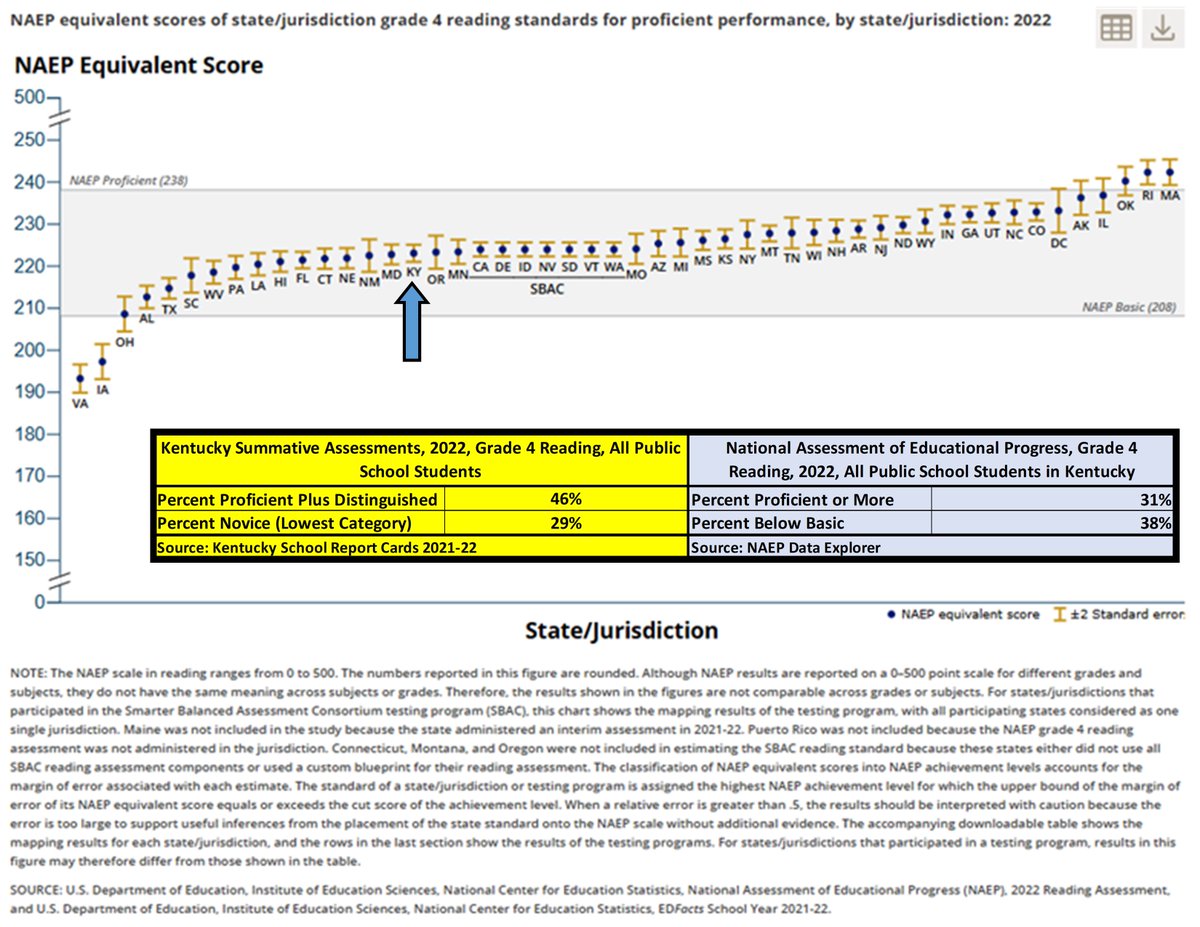

 Agustin Tristan
 American Psychological Association
 Brain Health Alliance Virtual Institute (BHAVI)
 Catherine & Katharine
 Critically Speaking
 Education Consumers Foundation
 Facilitated Communication Blog
 Fulcrum, The
 Groupe International de Recherches et expertises en Ingénierie des Evaluations en Formation
 Independent Voter Network
 Institute for Objective Policy Assessment
 James G Martin Center for Academic Renewal
 Learning Scientists
 National Association of Scholars
 Nonpartisan Education Review
 Represent Us
 Retraction Watch
 U.S. Metric Association


